
Last updated October 16, 2026
 Water damage drying
 Fire & smoke cleanup
 Mold remediation
 Storm response
 Sewage cleanup
 Reconstruction
Free visual inspection and a written scope of work before any mitigation begins - photos, moisture readings, and drying logs go in your claim file
The scope we write is the scope we bill. Anything new gets shown to you, in writing, before we touch it.
Get your free estimateDamage Restoration Warning Signs: A West Palm Beach Homeowner’s Reference Guide
A water stain on a ceiling is not a stain. It’s a map. Its shape, color, ring pattern, and location tell a trained technician whether the moisture source is a roof penetration, a sweating condensate line, or a slow pipe failure inside a wall cavity. Most catastrophic restoration jobs in West Palm Beach didn’t start catastrophically. They started as a single warning sign a homeowner dismissed, painted over, or misread for months. This guide teaches you to read the map yourself: which signs mean act now, which mean monitor, and which mean something specific about what’s happening behind the drywall. You’ll learn what South Florida’s climate does to warning signs that national guides miss, which indicators you can safely evaluate from outside a damaged structure, and the three situations where Florida law requires a licensed inspector before any contractor can legally begin work.
Quick Answer
The most reliable damage restoration warning signs in West Palm Beach homes are water stains with defined borders and color bands (they reveal whether a leak is active or resolved), musty odors that grow stronger in humid weather (they indicate an active mold colony, not just old staining), efflorescence or bubbling paint at the base of exterior walls (moisture wicking up through the slab), and any post-fire structural element showing deflection, charring deeper than one-quarter inch, or spalling concrete. If a stain grows within 48 hours, an odor persists more than 72 hours, or you see black streaking spreading across grout lines, call a restoration professional. Three conditions require a licensed Florida inspector before any standard contractor can legally begin work: suspected compromised structural framing after a fire, visible mold in an HVAC system serving more than 10,000 square feet of occupied space, and any water intrusion tied to a failed sanitary sewer line.
Restoration work we handle
Table of Contents
- How to Read a Water Stain Like a Restoration Technician
- South Florida Mold Warning Signs National Guides Get Wrong
- Structural Warning Signs After Fire Damage You Can Spot From Outside
- What Musty Odor Location Tells You About Mold Colony Size
- Three Warning Signs That Require a Licensed Inspector in Florida
- South Florida Slab Moisture and the Warning Signs Hidden at Floor Level
- Documenting Warning Signs for Your Insurance Claim
- The 48-Hour Response Timeline for Active Water Intrusion
How to Read a Water Stain Like a Restoration Technician
When we walk into a West Palm Beach home and see a ceiling stain, we read it before we touch it. The color, the edge definition, the ring pattern, and the location each tell a different part of the story. Here’s how to read that map yourself.
Color tells you whether the source is active or resolved. A dark brown or copper-toned stain with soft, bleeding edges usually means active moisture still present in the drywall. The water is actively dissolving the gypsum core and pulling minerals and adhesives through the paper facing. A pale yellow or gray stain with crisp, defined edges typically means the source has stopped and the material dried, leaving behind mineral deposits and adhesive staining only. The difference matters: brown and wet means you need extraction and drying now. Pale and dry means you need a repair scope, but you are not in an emergency window anymore.
Ring patterns reveal the leak’s rhythm. A series of concentric rings, like a tree stump, tells us the leak has been intermittent for a long time. Each ring represents a water event that dissolved minerals, carried them to the stain’s edge as the water evaporated, and deposited them. Multiple rings mean repeated wetting and drying cycles over months or years. A single solid stain with no rings usually means one event: a one-time overflow, a single storm penetration, or a burst pipe that was shut off quickly.
Location narrows the source. A stain centered on a ceiling in a direct vertical line from a bathroom fixture suggests a supply line or drain issue. A stain near an exterior wall corner after a storm suggests a roof flashing failure or a compromised soffit. A stain running along a ceiling joist line suggests water traveling along the framing member from a distant source. In West Palm Beach, where summer storms dump an inch of rain in 30 minutes, we regularly see stains that appear near the roofline only after heavy rain and disappear entirely during dry season. Those are roof or flashing issues, not plumbing.
Textural changes matter more than color. Run your hand across the stain area if you can safely reach it. Bubbling, peeling, or soft drywall means the gypsum core has lost structural integrity. Crumbling or sagging means the material is failing. These are the areas that collapse if ignored. A water stain on a ceiling is a map of active or past moisture intrusion, and its shape, color, and location tell a trained technician whether the source is a roof, a condensate line from an AC handler, or a slow pipe failure inside a wall. If your stain is soft to the touch or growing within a 48-hour window, call a professional. This is the beginning of an active intrusion, not the end of an old one.
South Florida Mold Warning Signs National Guides Get Wrong
Most national mold guides are written for homes in four-season climates. They focus on basement dampness, winter window condensation, and attic humidity after snow melt. West Palm Beach does not have basements. Our homes sit on concrete slabs, our HVAC systems run 11 months a year, and our outdoor air stays above 70% relative humidity most of the year. The mold warning signs that matter here are different.
Black streaking on wall grout tells a different story in South Florida. In much of the country, black grout streaks are usually cosmetic: mildew feeding on soap residue and skin oils in a shower. In West Palm Beach, the same visual indicator often means something else. When we sample those streaks in Palm Beach County homes, a significant portion return positive for Stachybotrys or Chaetomium, the species that indicate chronic moisture, not just surface dampness. The reason is simple: our walls stay warm and humid year-round, and the moisture that feeds shower mold never fully dries. Black grout streaks that spread across tiles and reappear within days of cleaning are a mold warning sign specific to humid coastal climates. Clean them repeatedly and they return because the moisture source is behind the tile, not on it.
Musty odor you smell when you first open the front door is a different signal here than it is up north. In dry climates, an odor at entry usually means something specific: a leak under a sink, a damp crawl space, a wet drywall patch. In West Palm Beach, we train technicians to separate the smell of a closed-up house from the smell of active microbial growth. A closed-up house smells stale for the first 60 seconds then fades as air moves. Active mold growth smells persistent: earthy, sour, or like wet paper, and it gets stronger the longer you stay. If the odor intensifies when your AC is running, the colony is likely in or near the HVAC system. If it intensifies at night, when the air is still, the problem is in an enclosed wall or ceiling cavity.
Condensation on interior walls in summer is not normal, even in Florida. We see this in West Palm Beach all the time: homeowners accept sweating walls as a South Florida reality. It isn’t. If your interior walls collect condensation on humid days, or you see water beading at the base of the drywall where the wall meets the slab, you have a thermal bridge pulling cold air through a gap and hitting warm humid air inside the wall. That moisture loads the drywall, feeds mold, and eventually delaminates the paper facing. In our experience, when a West Palm Beach home shows condensation on an interior wall, there’s a hidden moisture load somewhere on the other side of that drywall. The visible beads are just the surface symptom.
For homeowners in older West Palm Beach neighborhoods like Flamingo Park or El Cid, where original 1950s block construction meets decades of renovation, these South Florida warning signs are particularly important. The wall systems were designed for a different climate assumption than the one we live in now. A brief note: if you find yourself needing mold remediation in West Palm Beach, the scope should always start with finding the moisture source, not just treating visible growth. Kill the mold without fixing the water, and you’ll be back in the same spot within a season.
Structural Warning Signs After Fire Damage You Can Spot From Outside
After a fire, the first instinct is to walk through the structure and assess what’s left. Do not do this. A fire-damaged structure is a mechanically altered building. Materials that look intact may have lost their load-bearing capacity. Here’s what you can observe safely from outside, from a doorway, or from a window without entering a compromised space.
Look for deflection, not just charring. Deflection means a structural member has begun to bow, sag, or twist. Walk the exterior and sight along the ridge line of the roof. If the ridge line dips in the middle, or if a roofline that was straight before the fire now shows visible curvature, the roof structure has lost capacity. Do not enter. The same applies to floor systems: if you can see a floor from the doorway and it’s sagging between joists, that’s deflection under load. The structure is actively failing.
Charring depth matters more than charring area. A wide area of surface scorching may look dramatic, but it is generally superficial. Charring that has penetrated deeper than one-quarter inch into a structural member means that member’s load-bearing capacity has been compromised. From outside, you can evaluate charring depth on exposed beams, joist ends visible in the eaves, or studs visible through a damaged exterior wall. If you can count growth rings in the charred wood, the char has penetrated far enough to matter. That member will need to be replaced or sistered by a restoration contractor after a structural engineer has evaluated the framing system.
Spalling concrete is a structural red flag. Fires get hot enough to drive moisture out of concrete explosively. When concrete spalls, the surface pops off in chunks and the aggregate beneath is exposed. Spalling on a load-bearing column, a masonry wall, or a concrete tie beam means the concrete’s compressive strength has been compromised in that location. This is not a cosmetic problem. Spalled concrete in a post-fire structure means a structural evaluation is required before any restoration work can be scoped or priced. In West Palm Beach, where many homes have CBS (concrete block and stucco) construction, spalling after a fire is one of the most common signs that a structure needs more than cosmetic repair.
Our fire damage restoration service in West Palm Beach always begins with structural observation and documentation before any interior work is scoped. If deflection, deep char, or spalling is present, we stop and recommend a Florida-licensed structural engineer or building inspector before work proceeds. That’s The Garrison Standard: do it by the book. The book says you don’t repair a compromised structure without knowing what’s still holding weight.
What Musty Odor Location Tells You About Mold Colony Size
Odor is a data source. A musty or earthy smell is volatile organic compounds (VOCs) off-gassing from active microbial growth. The location and intensity of that odor tell you a surprising amount about the colony’s size and location behind the walls. Here’s how to map it.
Intensity is a rough proxy for colony size. A faint odor you only notice when you’re on your hands and knees near a baseboard typically indicates a small, contained growth behind that section of wall. A strong odor that hits you when you enter the room indicates a larger colony, or a colony with active moisture supply that’s releasing VOCs at a higher rate. An odor that permeates an entire floor of the home usually indicates a colony in the HVAC system or in a shared wall cavity that’s being distributed by air movement.
Location sharpens the picture. Odor localized to a single room, strongest near the floor, points to a slab moisture issue or a pipe leak in the wall. Odor strongest near the ceiling points to roof intrusion or an AC condensate pan overflowing inside an air handler. Odor that moves from room to room, or that intensifies when the HVAC runs, points to contamination in the ductwork or the air handler. In West Palm Beach, where air handlers are commonly located in unconditioned garages or attic spaces, that’s a frequent finding. The air handler sweats, the drain pan overflows or cracks, and the moisture feeds growth that the blower then distributes through the whole home.
Time-of-day variation gives you an idea of moisture activity. In our experience, an odor that’s stronger in the evening and at night, when the air is still, indicates growth in an enclosed space. During the day, air movement and temperature changes disperse the VOCs and make the odor harder to detect. An odor that’s stronger during the heat of the day, when attic temperatures rise and humidity spikes, indicates growth in the attic or in the eaves. That’s a South Florida pattern specifically: attic growth blooms in the afternoon heat and releases VOCs that drop into the living space as the evening cools.
Step-by-step odor mapping:
- Close all exterior doors and windows and turn off the HVAC for 30 minutes.
- Walk the home from the front door inward, pausing at each room threshold and breathing normally through your nose.
- Note where the odor is strongest on a simple floor plan sketch. Mark intensity on a three-point scale: faint, moderate, strong.
- Turn the HVAC back on and walk again 15 minutes later. Note whether any room’s intensity changed.
- Compare the two maps. A room that intensified with the HVAC on suggests duct or air handler involvement. A room that remained stable suggests a contained wall or ceiling source.
This map is exactly the kind of information that helps a restoration technician scope a job without unnecessary demolition. When you call a company like Keegan Restoration West Palm Beach, tell them you’ve already mapped the odor. It saves time and narrows the search. And if the odor persists after cleaning and repainting, the colony is still active. Musty odor that returns within days of scrubbing surfaces is never a surface problem.
Three Warning Signs That Require a Licensed Inspector in Florida
Florida has specific legal triggers that require a licensed inspector before restoration work can proceed. A standard restoration contractor cannot legally begin work on these three conditions. You’ll need a Florida-licensed building inspector, mold assessor, or structural engineer first, depending on the condition.
1. Suspected compromised structural framing after a fire. Florida Building Code requires that any structure with fire damage to load-bearing elements be evaluated by a licensed structural engineer or building inspector before repairs can be permitted and completed. If you see deflection, deep charring, or spalling as described above, the clock stops. No contractor can legally scope, price, or perform repairs to structural elements without a professional evaluation and, in most West Palm Beach jurisdictions, a permit that references that evaluation. Any contractor who says otherwise is asking you to take a legal risk.
2. Visible mold growth in an HVAC system serving more than 10,000 square feet of occupied space. Florida Statute 468 requires a licensed mold assessor to evaluate and write a protocol for mold remediation when the affected area exceeds 10 square feet, and when the HVAC system is involved, the requirements get stricter. If you see visible growth inside the air handler, on the coils, in the ductwork, or on the inside of supply registers, and the system serves a large home or any multi-unit structure, you need a licensed mold assessor to write the scope before any remediation begins. This is not optional, and it’s one of the most commonly ignored rules we see in Palm Beach County.
3. Water intrusion tied to a failed sanitary sewer line. This is a public health issue, not just a property damage issue. When a sewer line fails and the intrusion involves Category 3 water (sewage, or water that has come into contact with sewage), Florida Department of Health protocols apply. The affected area must be contained, the contaminated material removed and disposed of under specific rules, and the space verified clean before it can be reoccupied. In cases where the sewer failure is on the municipal side, the local utility must be involved. A restoration contractor can perform the cleanup, but the initial assessment and the safety protocol should be established by a qualified environmental or public health professional.
These three triggers exist because the consequences of getting them wrong are severe. Structural failure kills. Improper mold remediation makes things worse. Sewage contamination carries pathogens that survive standard cleaning. At Keegan Restoration West Palm Beach, we follow Florida law on all three without exception. The Garrison Standard means the price is put in writing before any work begins, and part of that written scope is confirming that no legal trigger has been missed. When a licensed inspector is required, we pause and point you to one. That’s not a delay. That’s the trade done correctly.
South Florida Slab Moisture and the Warning Signs Hidden at Floor Level
West Palm Beach homes sit on concrete slabs. There’s no basement, no crawl space, no air gap between the living floor and the ground. That means groundwater, irrigation overspray, and plumbing leaks don’t have far to travel before they find your flooring and your walls. The warning signs at floor level are some of the most commonly missed in South Florida.
Efflorescence at the base of exterior walls. Efflorescence is the white, chalky mineral deposit left on concrete or masonry when water moves through the material and evaporates, leaving minerals behind at the surface. If you see white powder on the interior side of an exterior wall at the slab line, or on the slab itself where the carpet meets the wall, water is moving through your slab or up through the footer. In West Palm Beach, this is often the first visible indicator of a compromised exterior seal, a sprinkler head spraying the wall, or a slab that was poured without a proper vapor barrier decades ago.
Buckling or cupping hardwood flooring in a home without a plumbing leak. Wood floors cup when the bottom of the board absorbs more moisture than the top and swells. In a home with no active plumbing leak, cupping floors near exterior walls usually mean moisture migrating up through the slab. This is a classic West Palm Beach warning sign. The slab is wicking groundwater, the vapor is collecting under the flooring, and the wood is telling you. Tile floors hide this warning sign completely, which is why slab moisture problems in tiled homes often go undetected until the moisture reaches the drywall.
Baseboards that pull away from the wall at the slab line. When moist air moves behind a baseboard, the wood expands and then contracts as it dries, which repeatedly flexes the fasteners and the adhesive. The baseboard pulls away from the drywall. It may also stain along the bottom edge from trapped moisture. Either way, that gap is a warning sign that moisture is present at the wall-to-slab junction. In our experience, when a homeowner in West Palm Beach sees baseboards separating in a home without other water issues, the source is almost always slab moisture or a slab plumbing leak.
Odor that’s strongest at the floor in one room only. We covered odor mapping above, but a floor-level odor localized to one room deserves its own flag. This pattern usually means a plumbing leak in the slab under that room. In West Palm Beach, older neighborhoods like Grandview Heights and Sunshine Park have original cast iron sanitary lines running under the slabs. Those lines are now 60 to 80 years old. They fail. When they fail, the first warning sign is often just a persistent earthy smell near the floor in a hallway or a room adjacent to a bathroom. The pipe is leaking, the soil around the leak is damp, and the odor is coming up through the slab. By the time water is visible, the line has been failing for weeks.
If you see any of these floor-level warning signs in your West Palm Beach home, this is the time to start documenting. Photos, dates, and notes on when the condition appeared and whether it changes with rain or irrigation cycles. That documentation becomes the foundation of a legitimate insurance claim and a correctly scoped water damage restoration job in West Palm Beach.
Documenting Warning Signs for Your Insurance Claim
Insurance companies do not argue with documentation. They argue with memory, with estimates, and with vague descriptions. When you document warning signs properly from the first day you notice them, you build a file that supports your claim and protects you through the entire restoration process. Here’s the documentation standard we recommend to every homeowner we work with in West Palm Beach.
- Photograph everything before you touch anything. Use your phone. Take wide shots that show the room context and close-ups that show the detail. If you’re photographing a stain, include a reference object like a coin or a ruler for scale. If you’re photographing mold, do not wipe it first. The photo is evidence. Take it as-is.
- Date and note every observation. Create a simple running note on your phone: date, time, what you saw, what room, what the weather was like. “June 14, 9 PM, brown stain on living room ceiling near east wall, storm earlier today” is a legitimate piece of evidence in a claim.
- Track changes. If the stain grows, if the odor worsens, if the floor begins to cup, photograph it again from the same angle and add a note. Before-and-after documentation of a deteriorating condition is the strongest evidence that the damage was sudden and accidental, which is what most West Palm Beach homeowner policies actually cover.
- Record what you spent, what you threw away, and what you saved. If you run a dehumidifier, keep the receipt. If you move furniture out of the room, photograph the furniture. If you cut out a piece of wet drywall to stop the spread, photograph it before you dispose of it and keep a sample in a sealed plastic bag. This is what claims adjusters call “mitigation documentation,” and it’s exactly what they look for when deciding how much to reimburse.
- Keep a copy of every contractor conversation. If a plumber, a roofer, or a restoration company gives you a verbal assessment, ask for it in writing. A one-sentence email is fine. “Confirmed slow leak at master bath supply line, recommend open wall and repair.” That sentence can be the difference between a claim that’s approved and a claim that’s denied for lack of evidence.
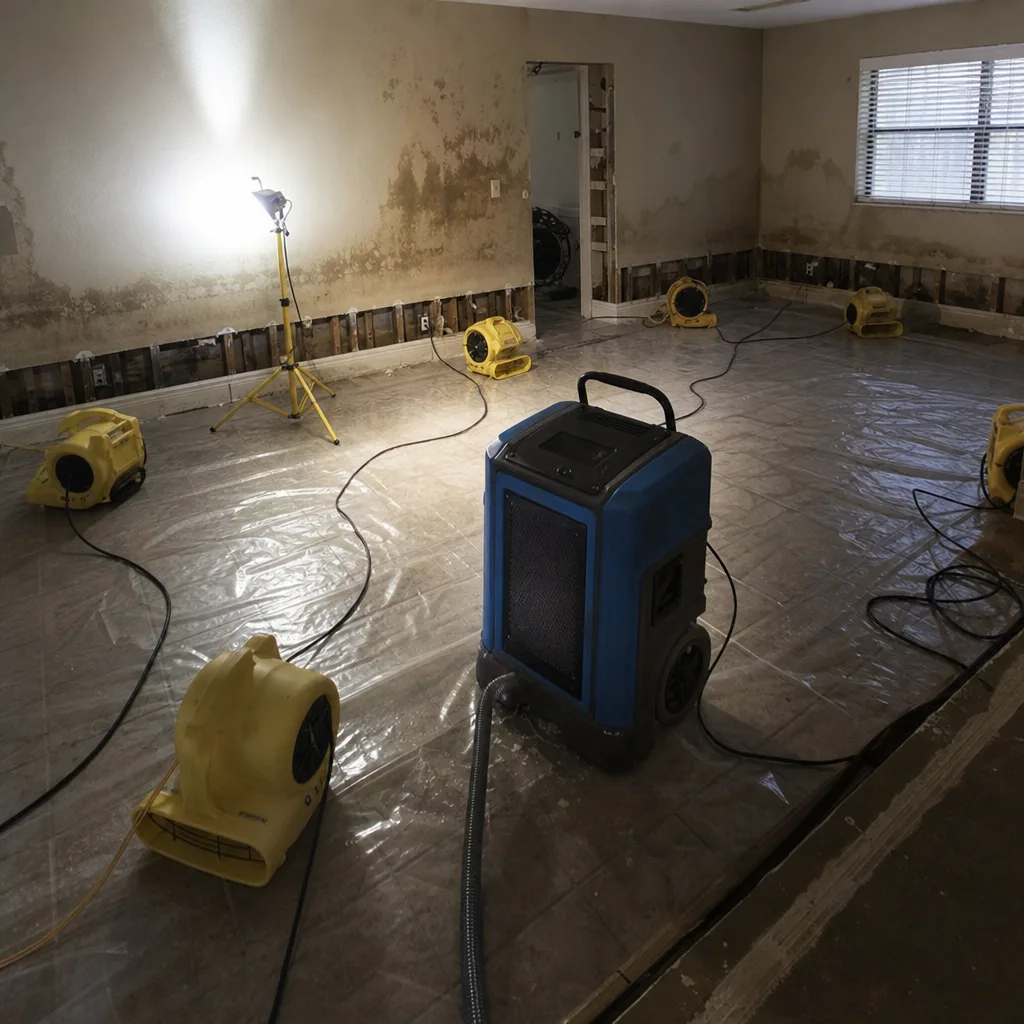
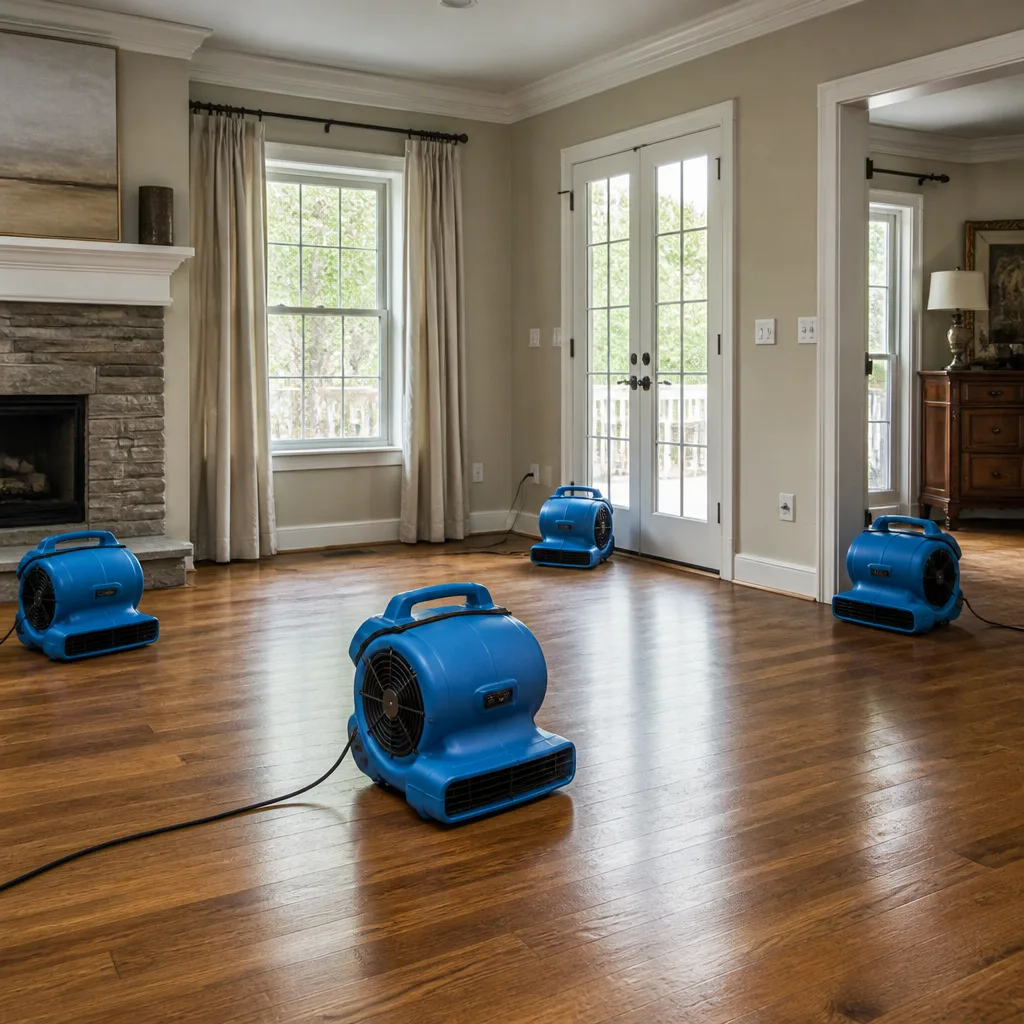
This is also where professional-grade drying and extraction equipment matters. When a restoration contractor runs Phoenix desiccant dryers, Dri-Eaz dehumidifiers, or B-Air air movers and documents the drying process with daily psychrometric readings, the insurance company sees a professional scope executed to measurable standards. That documentation is formatted to support your insurance claim. It shows the adjuster that the job was done correctly, the equipment was appropriate, and the costs are legitimate. Keegan Restoration West Palm Beach documents every job this way. The written scope, the daily readings, the photo log, the material receipts: all of it formatted to support your claim. That’s The Garrison Standard applied to the paperwork as well as the work.
The 48-Hour Response Timeline for Active Water Intrusion
Water damage is a clock. The difference between a contained repair and a full restoration scope is often measured in hours, not days. Here’s the timeline that matters for active water intrusion in a West Palm Beach home.
Hours 0-2: Stop the source and document. If it’s a plumbing leak, shut off the valve. If it’s a roof leak, contain it with a bucket and move furniture. Photograph everything before you move anything. You can’t stop a roof leak in a storm, but you can document the event while it’s happening.
Hours 2-12: Begin mitigation. The first 12 hours are the window where professional extraction and drying prevent secondary damage. Carpet padding, drywall, and insulation absorb water quickly, and once they’re wet, they begin to fail. Mold spores present in every Florida home activate within 24-48 hours of sustained moisture. Extraction within the first 12 hours dramatically reduces the mold risk.
Hours 12-48: The mold window opens. This is the critical period. Mold activation begins within 24-48 hours of sustained moisture. In West Palm Beach’s warm, humid air, that window is on the shorter end. If the water has been sitting for 48 hours, you’re no longer in a drying job. You’re in a mold prevention job, and the scope changes accordingly. This is why a live person answering the phone 24/7 matters. When water is actively damaging your home, a phone tree is an unacceptable delay.
Beyond 48 hours: The scope expands. After 48 hours of sustained moisture, you should expect material removal: wet drywall, wet insulation, and possibly affected flooring. The restoration scope now includes containing the affected area, removing the wet materials, drying the framing, and rebuilding. This is no longer a simple dry-out. It’s a full restoration.
The timeline is unforgiving, which is why our team at Keegan Restoration West Palm Beach answers calls with a live person around the clock. When you call (728) 220-0713, a real person picks up. We dispatch a background-checked, uniformed technician to your home, and that technician arrives with professional-grade equipment from brands like Dri-Eaz and Injectidry, operates to IICRC and RIA standards, and puts the price in writing before any work begins. No pressure, no phone trees, no price moving at the door.
Your Homeowner’s Warning Sign Toolkit
Here’s the reference toolkit we give to West Palm Beach homeowners who want a simple system for evaluating damage restoration warning signs before they call a contractor. Keep it simple. This is not a diagnostic protocol, it’s a triage guide.
Evaluate the stain:
- Brown or copper-toned with soft edges: active moisture, act now.
- Pale yellow or gray with crisp edges: resolved moisture, monitor and repair.
- Multiple concentric rings: intermittent leak over a long period.
- Stain is soft, bubbling, or sagging: material failure beginning, act now.
- Stain growing within 48 hours: active intrusion, do not wait.
Evaluate the odor:
- Faint, only at floor level in one room: possible slab leak or wall moisture.
- Strong, hits you at the door: active colony, professional assessment needed.
- Intensifies with HVAC on: duct or air handler involvement.
- Intensifies in evening: enclosed wall or ceiling cavity.
- Persists after cleaning: the source is still active. Cleaning was cosmetic.
Evaluate the structure after fire:
- Ridge line dips or curves when sighted from outside: deflection, do not enter.
- Char deeper than a quarter-inch on any structural member: compromised.
- Spalling concrete on columns, walls, or tie beams: lost compressive strength.
- Any of these three: licensed inspector required before restoration begins.
Evaluate floor-level moisture:
- White powder at slab line: water moving through concrete.
- Cupping floors with no plumbing leak: slab moisture.
- Baseboards pulling away at the bottom: trapped moisture behind them.
- Floor-level odor in one room: possible under-slab pipe failure.
This toolkit is the kind of thing that keeps small problems small. The earlier you see the warning sign, the smaller the scope, the lower the cost, and the faster the job. That’s the practical reality of damage restoration in West Palm Beach: the most expensive jobs are the ones that had a warning sign six months before anyone called.
See the difference
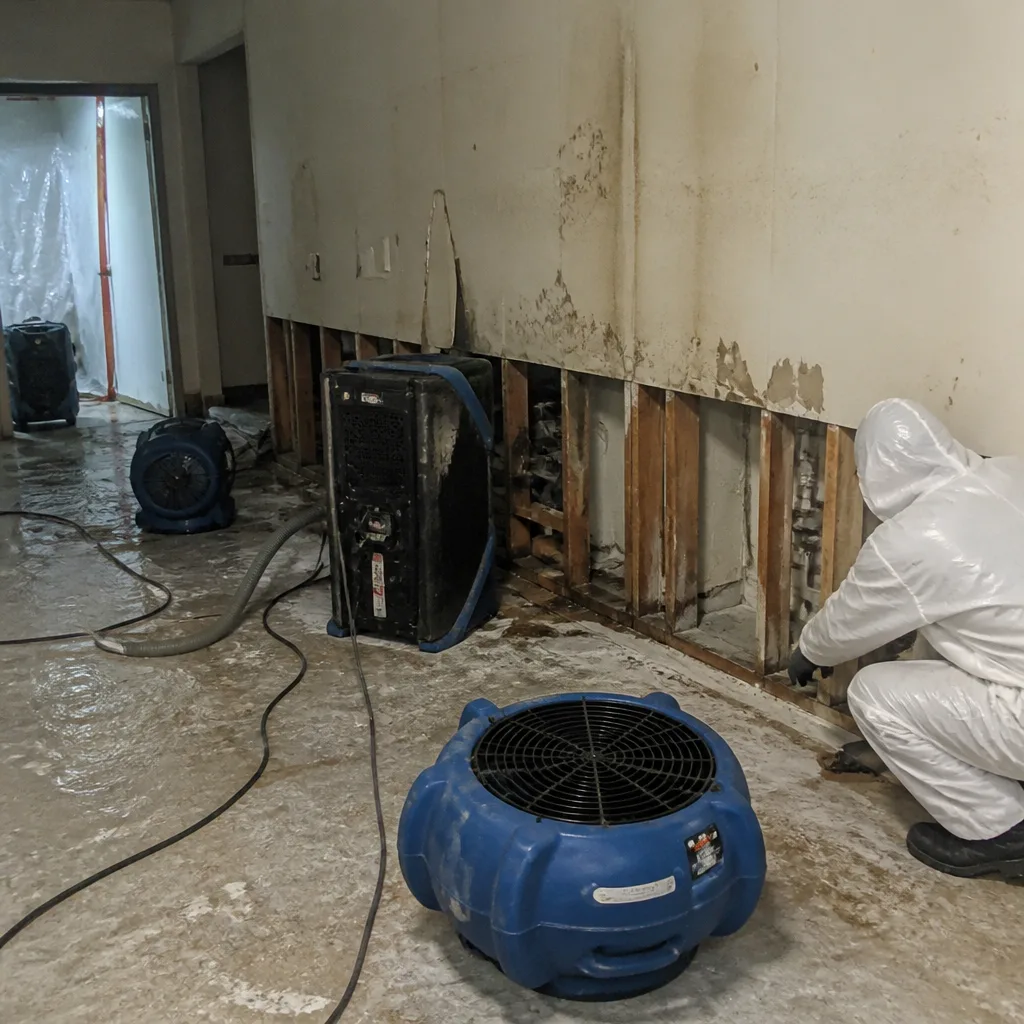 Before
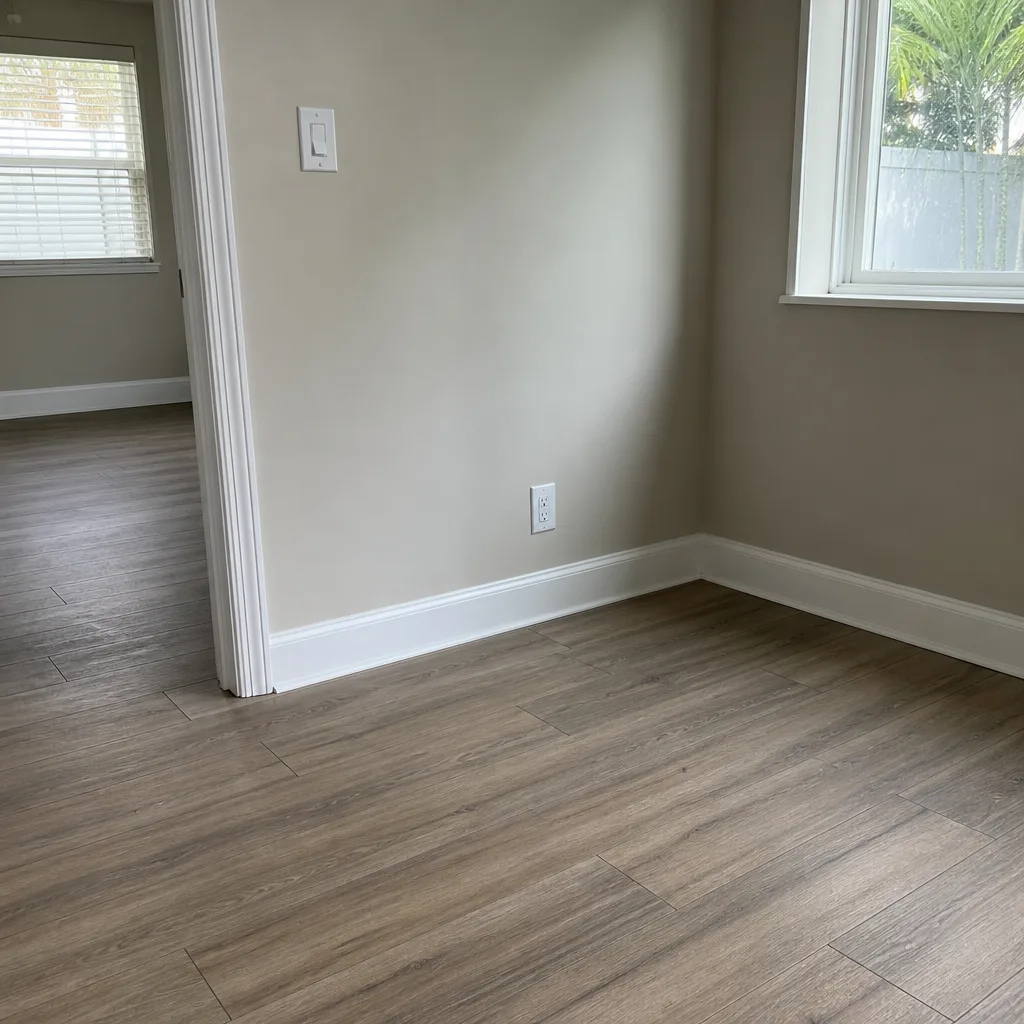 After
After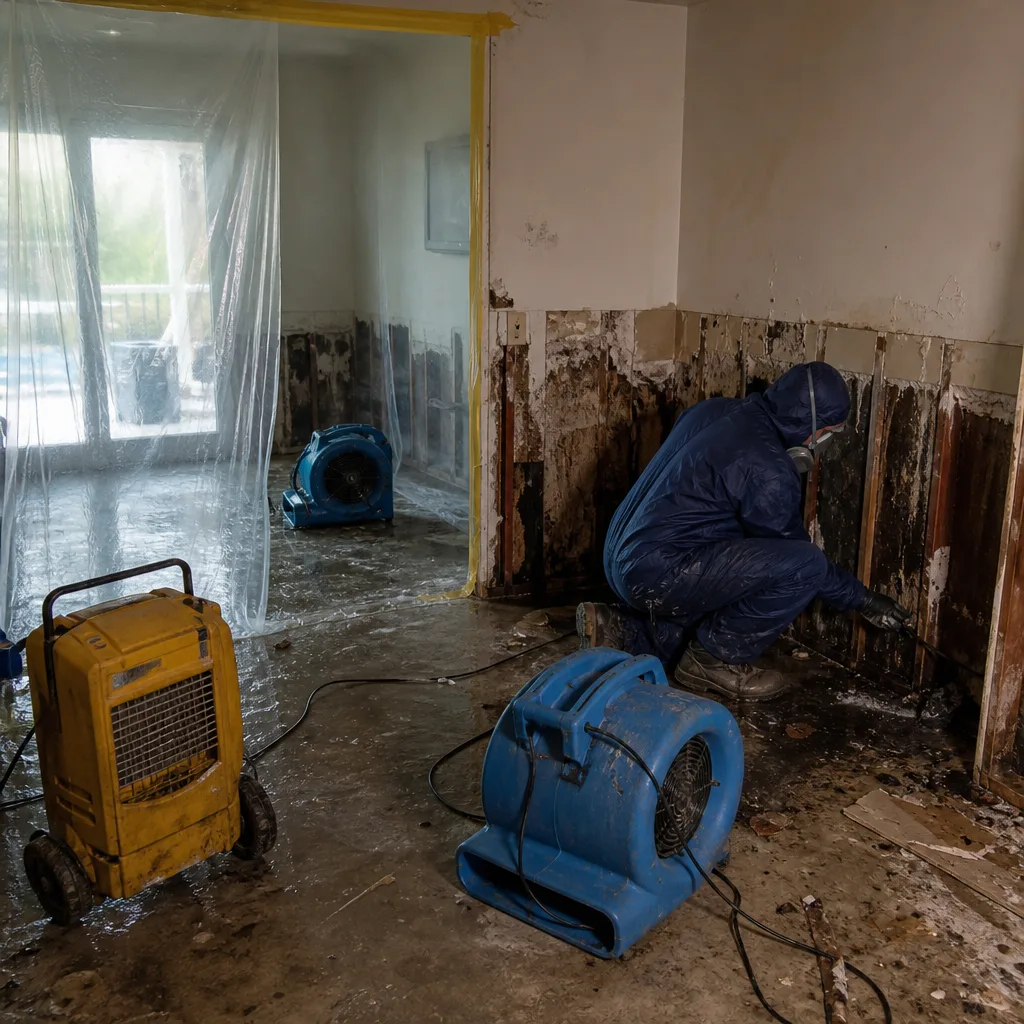 Before
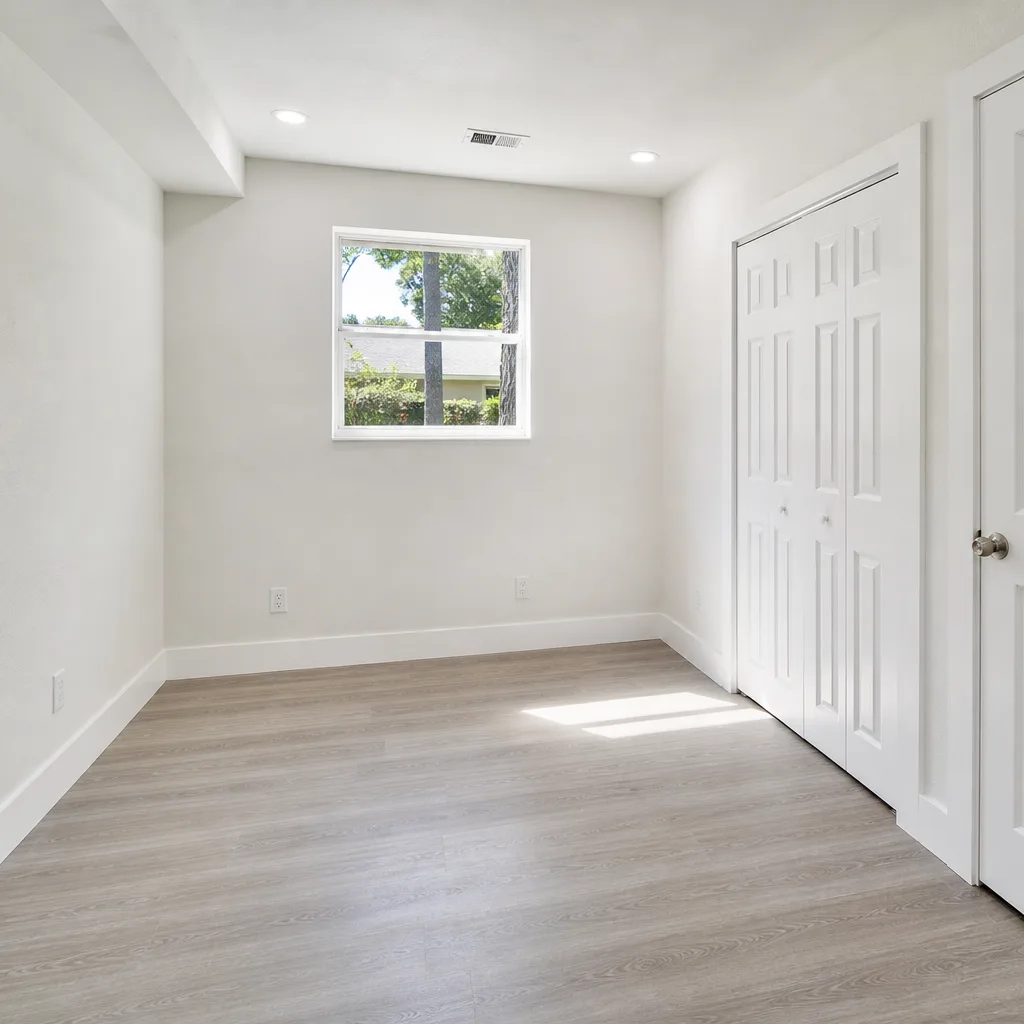 After
After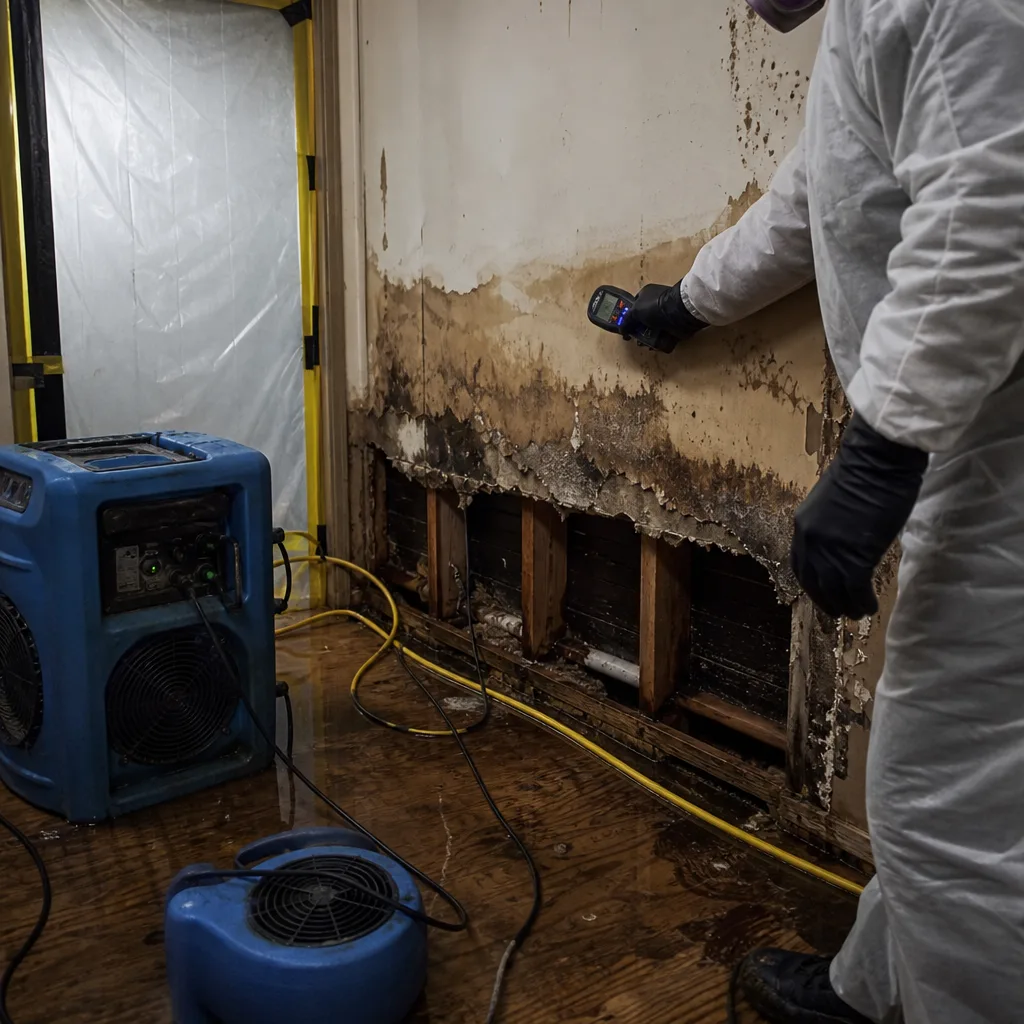 Before
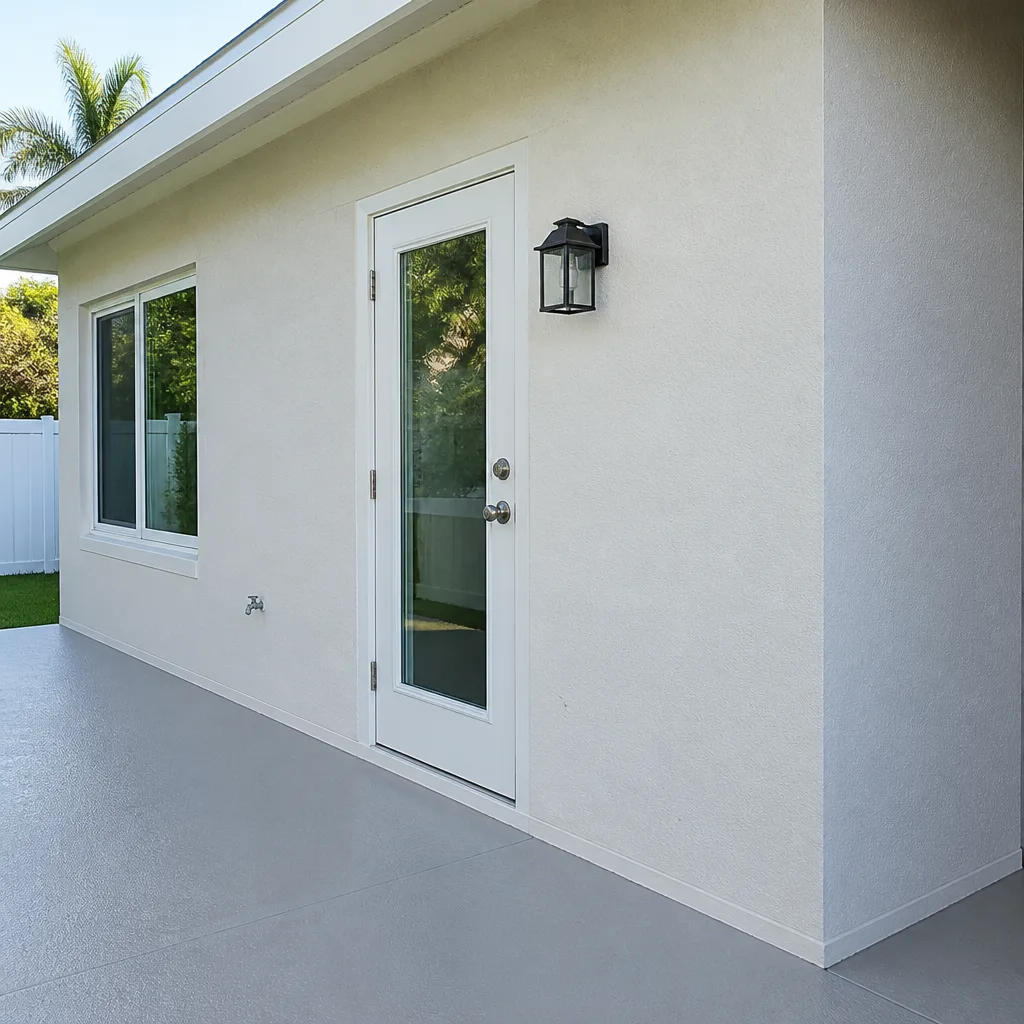 After
AfterCommon Mistakes to Avoid
- Painting over a water stain. The stain bleeds through in weeks because the moisture source is still active. Paint seals the surface and traps moisture inside the drywall, which accelerates mold growth behind the paint layer. Always find and fix the source first, then repair the drywall, then paint.
- Ignoring a musty odor because it’s “normal for Florida.” It isn’t. If you can smell it, there’s an active moisture source feeding microbial growth somewhere. The longer you wait, the larger the colony and the larger the scope.
- Attempting DIY mold removal with bleach and a scrub brush. Bleach kills surface mold temporarily, but it doesn’t penetrate porous materials, and the moisture from the cleaning feeds the roots. Mold inside drywall, insulation, or grout returns within weeks. Professional mold remediation requires containment, proper removal, and source correction.
- Entering a fire-damaged home to “see what’s salvageable.” A fire-damaged structure is not safe to enter until it’s been evaluated for structural compromise, air quality, and electrical hazards. Let a professional do the first walk-through.
- Waiting for the insurance adjuster to arrive before starting mitigation. Most policies require you to mitigate further damage immediately. You’re legally obligated to prevent the damage from getting worse. Document everything, then start mitigation. Waiting for the adjuster can leave you with a denied claim for failure to mitigate.
- Hiring the first contractor who answers the phone without asking about documentation. In West Palm Beach, unlicensed and uninsured restoration operators are a real problem. Ask for proof of insurance, ask about their documentation standard, and get the scope and price in writing before any work starts. A contractor who won’t put the price in writing before work begins is a contractor who’s planning to move the price later.
- Running a dehumidifier for a few days and calling it resolved. A residential dehumidifier is designed for humidity control in a dry home, not for drying wet building materials. Wet drywall, wet insulation, and wet framing require professional-grade drying equipment and moisture monitoring. If the materials aren’t dried to a measured standard, the moisture stays in the wall and the mold comes later.
When to Call a Professional
Call a restoration professional when any of these conditions are present: a water stain that’s growing or soft to the touch, an odor that persists for more than 72 hours, visible mold growth larger than a dinner plate, any post-fire structural warning sign, water intrusion involving sewage, or any water event that has been sitting for more than 48 hours. If you’re in a West Palm Beach home and you’re not sure whether what you’re seeing is a warning sign or a false alarm, call anyway. A legitimate restoration company will tell you honestly whether you have a problem, and a good one will do it without charging you for the assessment. Keegan Restoration West Palm Beach offers free estimates in West Palm Beach. Call (728) 220-0713 and a live person will answer, listen to what you’re seeing, and tell you whether it’s worth a visit. If it is, we’ll arrive inside the window we give you, evaluate the condition, and put the scope and price in writing before any work begins. That’s The Garrison Standard, and it applies to every call we take.
Frequently Asked Questions
Water damage restoration in West Palm Beach typically ranges from $1,200 to $4,500 for a contained Category 1 or 2 event, which includes extraction, drying, and minor material removal. Larger events involving multiple rooms, sewage, or structural drying can run $6,000 to $15,000 or more. The cost depends on the square footage affected, the category of water, the drying time required, and the materials that need removal and replacement. Call (728) 220-0713 for an exact quote. Estimates are free, and the price goes in writing before any work starts.
Most homeowner policies in Florida cover sudden and accidental water damage, including burst pipes, appliance failures, and storm-related intrusion, but they typically exclude gradual damage like slow leaks that have been running for months. That’s why documentation matters from the first day you notice a warning sign. Photo logs, dated notes, and a written scope from a restoration contractor all support your claim. Keegan Restoration West Palm Beach formats every job’s documentation to support your insurance claim, and we coordinate directly with your adjuster throughout the process.
A live person answers the phone at Keegan Restoration West Palm Beach 24 hours a day, 7 days a week. For active water intrusion, we typically dispatch a technician the same day, often within a few hours of your call. West Palm Beach traffic and storm conditions can affect drive times, but we show up inside the window we give you. For mold and fire assessments, we schedule as quickly as the situation requires, and we always confirm the time in writing before we arrive.
If the visible mold growth covers more than 10 square feet, if the odor is strong and persistent, or if the moisture source has not been identified and corrected, you need professional mold remediation, not just a surface cleaning. Surface cleaning removes the visible growth but leaves the roots and the moisture source in place. Full remediation involves containment, material removal, HEPA filtration, and source correction. If you’re not sure, a professional assessment will tell you which scope is appropriate. Call (728) 220-0713 for a free estimate.
You always have the final say on your claim, but a restoration contractor with proper documentation can take most of the adjuster interaction off your plate. Keegan Restoration West Palm Beach provides photo logs, moisture readings, equipment records, and a written scope formatted for insurance claims. We coordinate directly with your adjuster, provide the documentation they request, and make sure they have what they need to move the claim forward. You stay informed, but we handle the paperwork.
What should I do while I’m waiting for help to arrive?
Stop the water source if you can do so safely, move furniture and valuables out of the affected area, and photograph everything before you touch it. Do not attempt to open walls, do not use a shop vac on sewage, and do not enter a fire-damaged structure. If the water is from a broken pipe, shut off the valve at the source or at the main. If it’s from a roof leak during a storm, put a bucket under it and document the event. Call (728)