
Last updated October 16, 2026
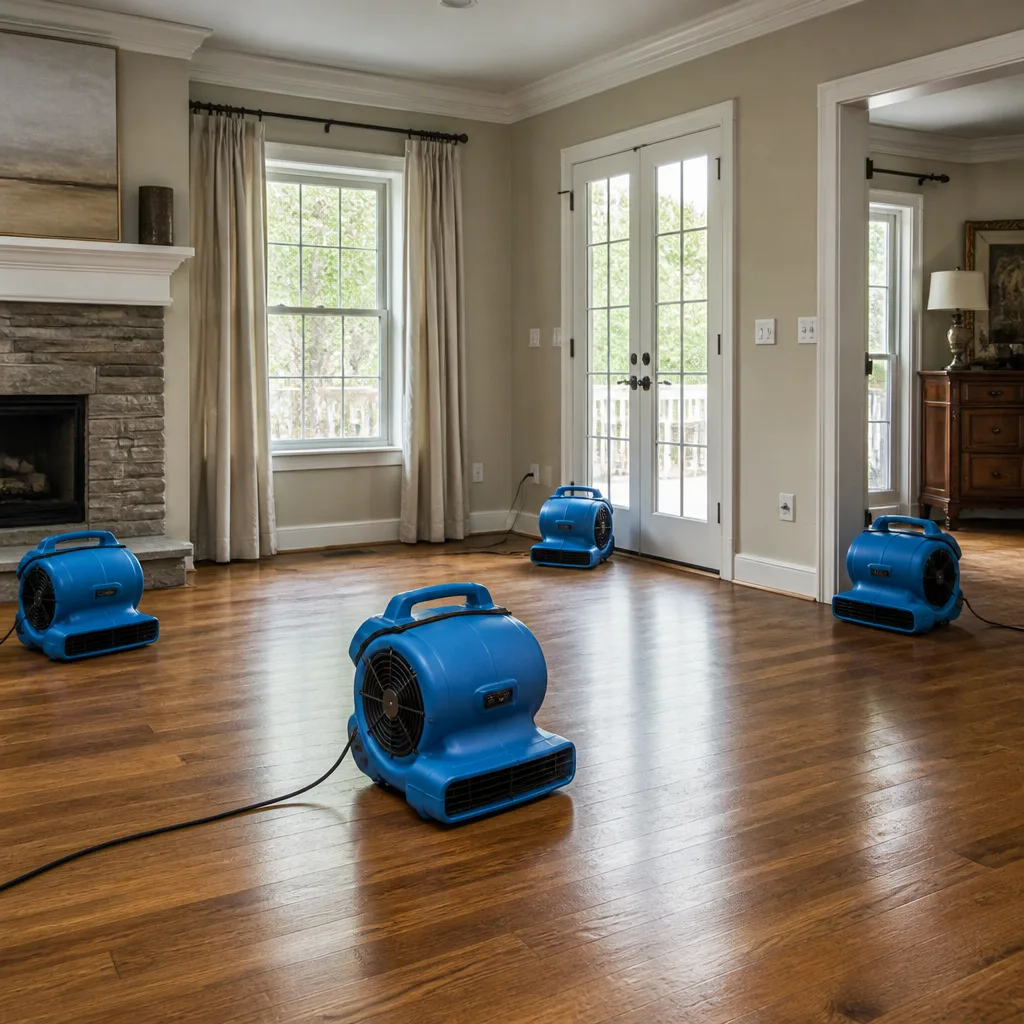 Water damage drying
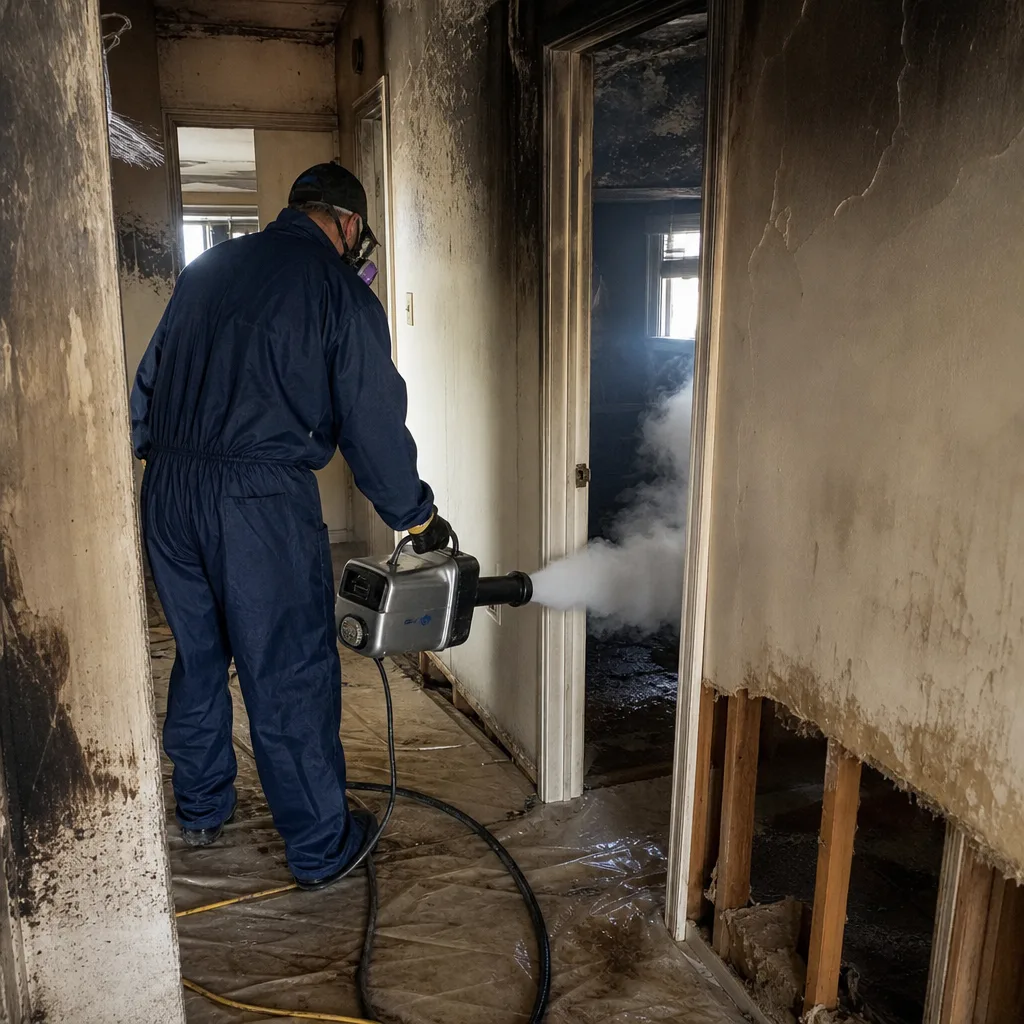
 Fire & smoke cleanup
 Mold remediation
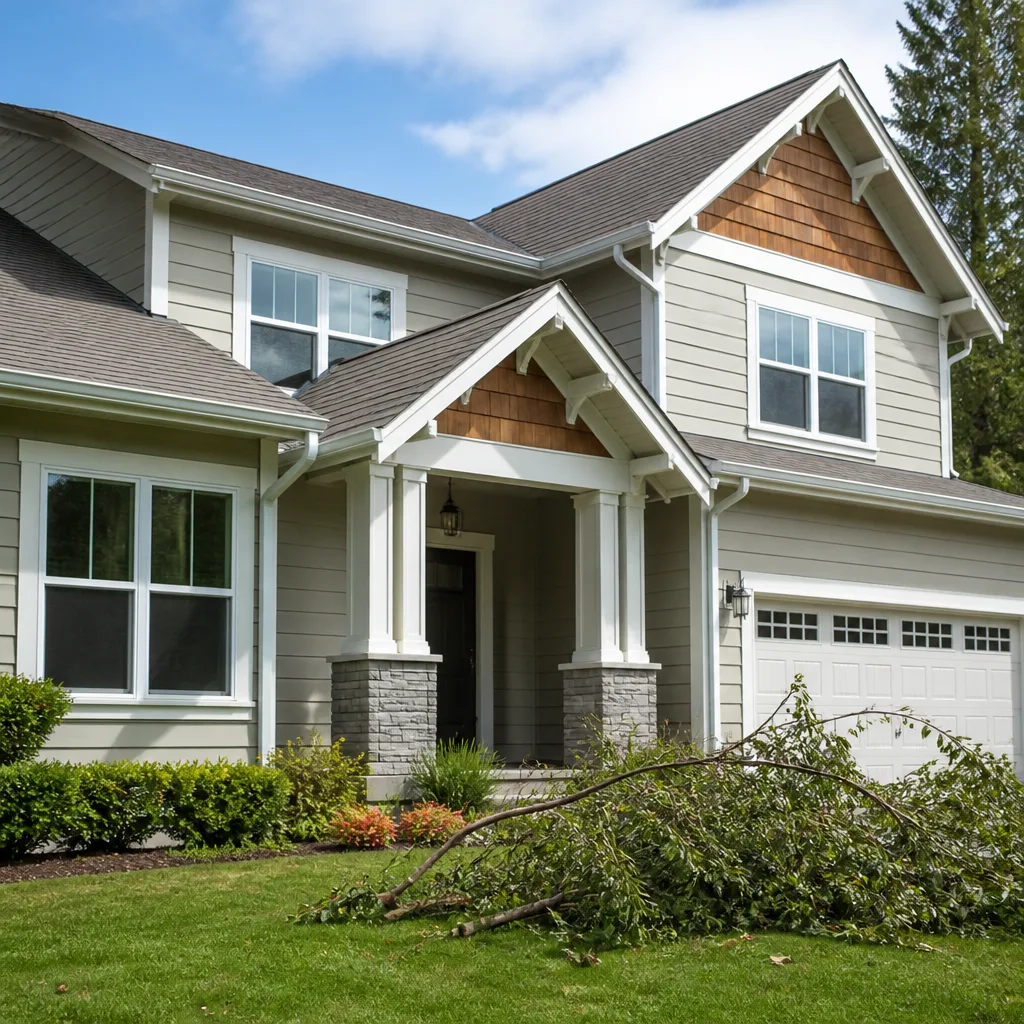 Storm response
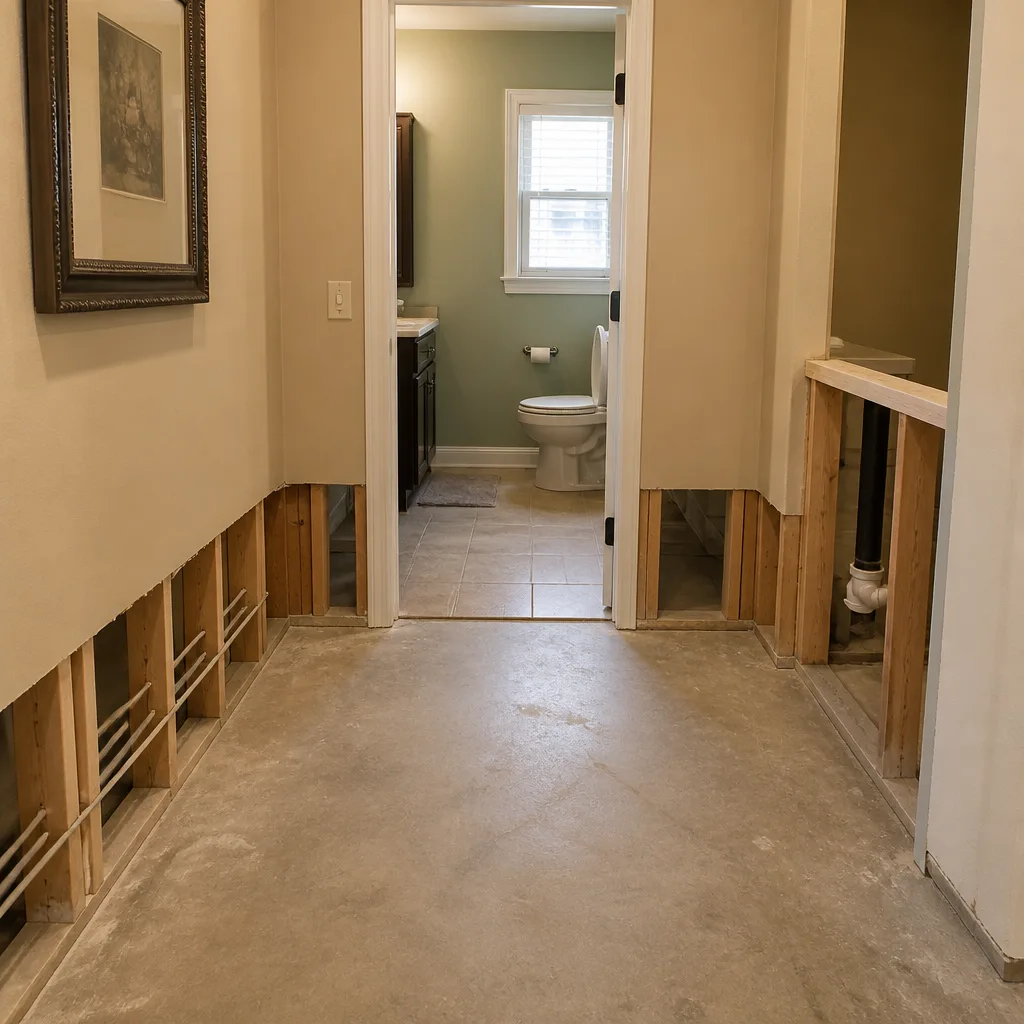 Sewage cleanup
 Reconstruction
Free visual inspection and a written scope of work before any mitigation begins - photos, moisture readings, and drying logs go in your claim file
The scope we write is the scope we bill. Anything new gets shown to you, in writing, before we touch it.
Get your free estimateHow to Hire a Damage Restoration Contractor in West Palm Beach: A Step-by-Step Guide
Florida’s contractor fraud complaints spike roughly 40% in the months after a major storm event, and Palm Beach County routinely lands in the top five counties statewide for post-disaster licensing violations. That statistic is not a reason to panic; it’s a reason to slow down and run a deliberate vetting process before you sign anything. This guide gives you exactly that process, step by step, written from the ground in West Palm Beach, where we deal with humidity-driven mold, hurricane wind damage, and the storm-chasing crews that follow both. For a broader look at protecting your home year-round, see our Seasonal Damage Restoration Care for West Palm Beach: Year-Round Homeowner’s Guide. By the time you finish reading, you will know how to verify a license in under three minutes, which five contract clauses protect your money, and how to compare estimates line by line without getting burned.
Quick Answer
To hire a damage restoration contractor in West Palm Beach, verify the company’s Florida license through the DBPR website, confirm they carry active general liability and workers’ compensation insurance, require a written scope of loss with line-item pricing before any work starts, and check that technicians are background-checked and uniformed. Never sign a contract with TBD allowances or verbal estimates, and never pay in full before the job is complete and documented. A disciplined contractor puts the price in writing, shows up inside the window they gave you, and stands behind the work for at least one year.
Interested in how we do it? See the Keegan Restoration West Palm Beach home page for the standard we run every job to.
Restoration work we handle
Table of Contents
- Step 1: Verify the Florida Contractor License via DBPR
- Step 2: Confirm Insurance, Bonding, and Workers’ Comp
- Step 3: Ask About Background Checks and Uniform Policy
- Step 4: Demand a Written Scope of Loss Before Any Work Begins
- Step 5: Five Contract Clauses That Protect Your Price
- Step 6: Compare Estimates Line by Line, Not Bottom Line
- Step 7: How to Spot a Storm-Chasing Crew
- Step 8: Documentation That Supports Your Insurance Claim
Step 1: Verify the Florida Contractor License via DBPR
The Florida Department of Business and Professional Regulation (DBPR) maintains a free, public license lookup tool. Go to myfloridalicense.com, enter the contractor’s name or license number, and you will see their current status, issue date, expiration date, and whether any disciplinary actions or complaints have been filed. This takes under three minutes. For a damage restoration contractor in West Palm Beach, you are looking for a certified or registered general contractor license (CGC or CGC151 class), or a mold-related license if the job is specifically mold remediation. Once the work is done, follow our Mold Remediation Maintenance Checklist for West Palm Beach Homeowners to keep your property protected. Florida requires a separate mold assessor and mold remediator license for mold work; a company that says they “also do mold” without that license is operating outside the law.
What a lapsed license means for your insurance claim: it can be a denial. Most homeowner policies require that repairs be performed by a licensed contractor. If your insurer finds the contractor was unlicensed at the time of the work, they can refuse to cover those repairs. A lapsed license is not a bureaucratic formality; it becomes a gap in your claim file. We have talked to homeowners in West Palm Beach who learned this after the fact, and the repair bill fell entirely on them. Check the license before you sign, not after.
The Water Damage Restoration in West Palm Beach page explains what a licensed, documented restoration process looks like from the first call to the final walkthrough.
Step 2: Confirm Insurance, Bonding, and Workers’ Comp
Ask the contractor for a certificate of insurance directly from their provider, not a photocopy they hand you. The certificate should list general liability and workers’ compensation, and it should name your property as additionally insured for the duration of the job. Call the insurer to confirm the policy is active. A contractor who hesitates to provide this is a contractor you should not hire.
Here is why workers’ comp matters specifically in West Palm Beach: if a worker is injured on your property and the contractor does not carry workers’ compensation, the injured worker can file a claim against your homeowner’s insurance. You could see your rates go up, or the claim could be denied and you could be named personally in a lawsuit. This is not rare in Florida; it is the single most common insurance exposure for homeowners during restoration work. Confirm the coverage before any crew walks through the door.
For Mold Remediation in West Palm Beach, that additional insured requirement matters even more, since mold claims are the most frequently disputed in Florida and the insurance carrier will scrutinize every contractor credential on file.
Step 3: Ask About Background Checks and Uniform Policy
This sounds like a nice-to-have until you think about what restoration work actually involves. Restoration crews are inside your home for days, often when you are not there. They move through bedrooms, bathrooms, closets. They see your medications on the counter, your jewelry box on the dresser, your family photos on the wall. A contractor who sends whoever is available, with no background screening and no uniform, is putting you in a position of trust with strangers you know nothing about.
Uniforms matter for a different reason than most people assume. It is not about looking polished; it is about accountability. When every technician wears a company uniform with a name, the homeowner always knows who is in their home and who to report to. If a problem arises, you can identify the person. If a company has no uniform standard and no check-in process, that is a red flag about how they run the rest of the job. Ask directly: “Do you background-check your technicians? Do they arrive in uniform?” If the answer is vague, keep looking.
We run every technician through a background check before they set foot on a West Palm Beach property, and they arrive in a Keegan uniform, no exceptions. It is part of the discipline we bring to every job, and it protects the homeowner as much as it protects our reputation.
Step 4: Demand a Written Scope of Loss Before Any Work Begins
The scope of loss is the single most important document in a restoration project, and most homeowners in West Palm Beach never ask for it. It is a line-by-line list of every task that will be performed, every material that will be used, and the exact price for each item. It gets its name from the insurance industry: it is the document that defines the loss, in detail, before work starts.
A real scope of loss prevents the most common horror story in this trade: the contractor gives a low verbal estimate, demolition begins, additional damage is “discovered,” and the price inflates by 40% before the first week is over. When the scope is written, that can still happen, but you have a document to compare against. You can see what was included, what was not, and what the contractor is now asking to add. Without the written scope, you have no baseline, and the price moves at the contractor’s discretion. We have seen this exact pattern play out in West Palm Beach after hurricanes, when demand is high and standards drop.
Never accept a scope that uses the words “TBD” or “allowance” for significant line items. Allowances are legitimate for small, unpredictable items like cabinet hardware selection, but they have no place on extraction, drying, demolition, or structural repair. If the contractor cannot price the core work, they are not ready to do the job.
Step 5: Five Contract Clauses That Protect Your Price
Most restoration contracts in West Palm Beach are written by the contractor, for the contractor. That does not mean you are powerless; it means you need to read them and push back on five specific clauses. For a complete overview of the restoration process, see The Complete Guide to Damage Restoration in West Palm Beach. Here is what to look for.
- Change order procedure. The contract should state that any additional work beyond the original scope must be documented in a written change order, signed by you, before that work begins. If the clause is missing, the contractor can perform unapproved work and bill you for it later. Demand this clause in writing.
- Payment schedule tied to milestones. Never pay the full contract upfront. Payments should release in increments as defined milestones are completed: 30% at contract signing, 30% after demolition and drying, 30% after reconstruction begins, and the final 10% after your walkthrough and final documentation. Avoid any contractor who asks for more than 50% before work starts.
- Scope of loss attached as an exhibit. The contract should explicitly reference the written scope as an integral part of the agreement. If the scope is a separate document and the contract does not incorporate it by reference, you have less legal leverage if the price later changes.
- Right to review and approve subcontractors. Many “contractors” in West Palm Beach are really just sales operations that sub out the actual work to whoever is available. The contract should name the subcontractors and require your approval before any substitution. If a contractor refuses to name their subs, walk away.
- Warranty and return-visit language. The contract should state, in writing, how long the work is guaranteed and what the contractor will do if the repair fails. If the contract is silent on warranty, you have no written right to a return visit, and a verbal promise will not hold up in Palm Beach County small claims court.
Every job we run through Fire Damage Restoration in West Palm Beach starts with a scope of loss in writing, not a verbal estimate, because that is the only way a homeowner can hold us accountable, and we want them to.
Step 6: Compare Estimates Line by Line, Not Bottom Line
When you have written estimates from two or three contractors, the instinct is to look at the total price at the bottom of the page. That is a mistake. Two estimates that are $5,000 apart often differ in what is actually included, not in the quality of the work. You need to compare them line by line.
Start by checking for the same scope. If Contractor A includes demolition, haul-away, and disposal, and Contractor B does not list those line items at all, Contractor B is either planning to add them as change orders (watch for that) or planning to leave the debris in your driveway. If Contractor A lists three days of commercial-grade drying with daily monitoring, and Contractor B lists “drying as needed,” those are not the same job. “As needed” is a blank check.
Next, check equipment specifics. A professional-grade drying plan in West Palm Beach includes the machine models the contractor will use. Ask for the brand names. We run Dri-Eaz, Phoenix, and XPOWER extraction and drying equipment on our jobs, along with B-Air air movers and Injectidry systems for hard-to-reach cavities. Those are the machines the restoration industry standards (IICRC, RIA, IFA) are built around. A contractor who uses consumer-grade dehumidifiers from a hardware store is not doing the same job, regardless of what the estimate says.
Finally, look for line items that should never be allowances. Extraction, moisture mapping, drying, demolition, structural framing, drywall, insulation, and electrical should all have specific dollar amounts, not “TBD” or “to be determined.” If you see those words next to the core scope, that is not an estimate; it is a placeholder, and the real price will find you later.
Step 7: How to Spot a Storm-Chasing Crew
After every major hurricane or tropical storm that touches Palm Beach County, out-of-state contractors roll into West Palm Beach neighborhoods in rented trucks with magnetic signs on the doors. They knock on doors, offer free inspections, and pressure homeowners to sign contracts on the spot. Many of them are gone within six weeks, back across state lines, unreachable when the work fails.
Here are the specific red flags to watch for in the weeks after a storm. First, check the license. A storm chaser may have a license from another state, but Florida requires a Florida license for work performed in Florida. If the DBPR lookup does not find them, do not hire them. Second, watch for pressure to sign “today” with a discount that expires “tonight.” Legitimate restoration contractors in West Palm Beach do not run limited-time storm specials; they give you the price in writing and let you think about it. Third, check for a local address. Ask the contractor where their office is located, physically, in Palm Beach County. If they cannot tell you, they do not have one. Fourth, ask who will service your warranty if something fails in six months. If the answer involves a phone number that will be reassigned, you are looking at a storm chaser.
Storm damage is stressful enough without signing over your insurance proceeds to a crew that will be in Louisiana by the time the drywall cracks. Run the vetting sequence and hold the line.
Step 8: Documentation That Supports Your Insurance Claim
Your restoration contractor should be documenting the job like the insurance adjuster is looking over their shoulder, because in practice, they are. Every photo, every moisture reading, every drying log, every line item in the scope of loss becomes part of the claim file your adjuster reviews. A contractor who documents thoroughly gives your claim a stronger foundation. A contractor who documents nothing leaves the adjuster with nothing to approve.
Specifically, the documentation should include: photographs of the damage before and after demolition, dated and time-stamped; moisture content readings from affected materials, taken with professional meters; a written drying plan that shows which equipment was placed where and for how long; a daily log of readings showing the drying curve; photographs of the completed repair against the original scope. All of this is standard practice for a contractor who works to IICRC standards, but not every contractor in West Palm Beach actually does it. Ask to see what their documentation package looks like before you sign.
This is where background-checked, uniformed technicians become more than a feel-good policy. When your insurance documentation includes the names of the technicians on site, their training credentials, and a clear chain of accountability, adjusters process the claim faster because questions about who did the work and whether they were qualified are already answered. If the contractor’s documentation is a jumble of unnamed workers and undated photos, the adjuster has a reason to ask more questions, and the claim slows down.
Common Mistakes to Avoid
- Hiring based on the lowest estimate alone. The lowest bid in West Palm Beach restoration work usually reflects what is left out, not what is saved. A contractor who quotes extraction and drying without equipment specifications is pricing a different job than one who lists Dri-Eaz and Phoenix machines by name. Compare the scope line by line before you compare the total.
- Signing a contract without a written scope of loss. If the scope is not written down, the price does not exist. Verbal estimates are worth the paper they are written on, and in Palm Beach County after a storm, that means they are worth nothing. Demand the written scope or do not sign.
- Skipping the DBPR license check. Three minutes on the state database can save you from hiring an unlicensed contractor and finding out after the fact that your insurance company will not cover the repair. Lapsed license means lapsed coverage in your claim.
- Paying in full before the job is complete. Once the contractor has all your money, their incentive to finish correctly is gone. Hold back at least 10% until the final walkthrough and the final documentation are delivered.
- Trusting a post-storm door knocker without local verification. The storm chasers who work Palm Beach County every hurricane season are good at what they do, and what they do is extract signatures, not water. Check for a local address, a Florida license, and a physical office before you sign anything.
- Accepting “TBD” allowances for core scope items. If the contractor cannot price the demolition or the drying, they are not ready to do the work. “TBD” on a line item is a blank check written on your insurance settlement.
See the difference
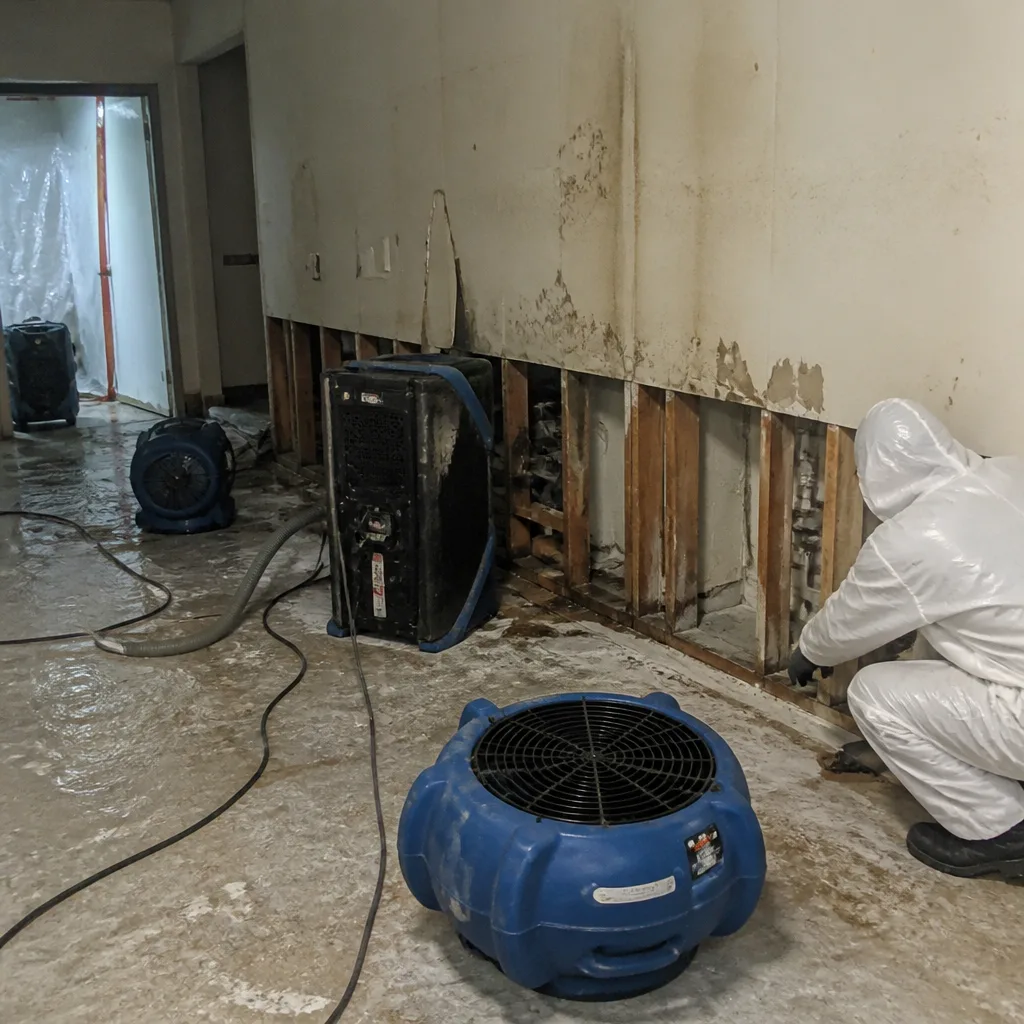 Before
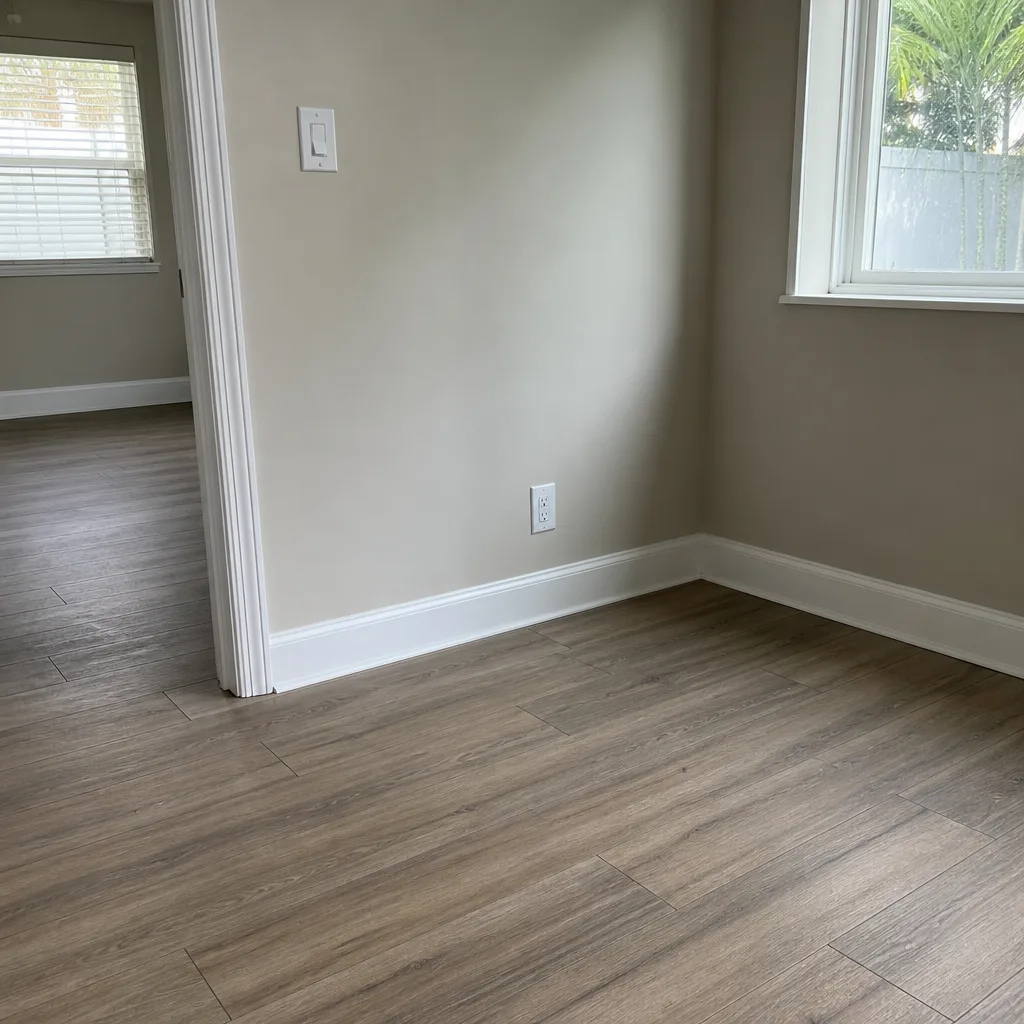 After
After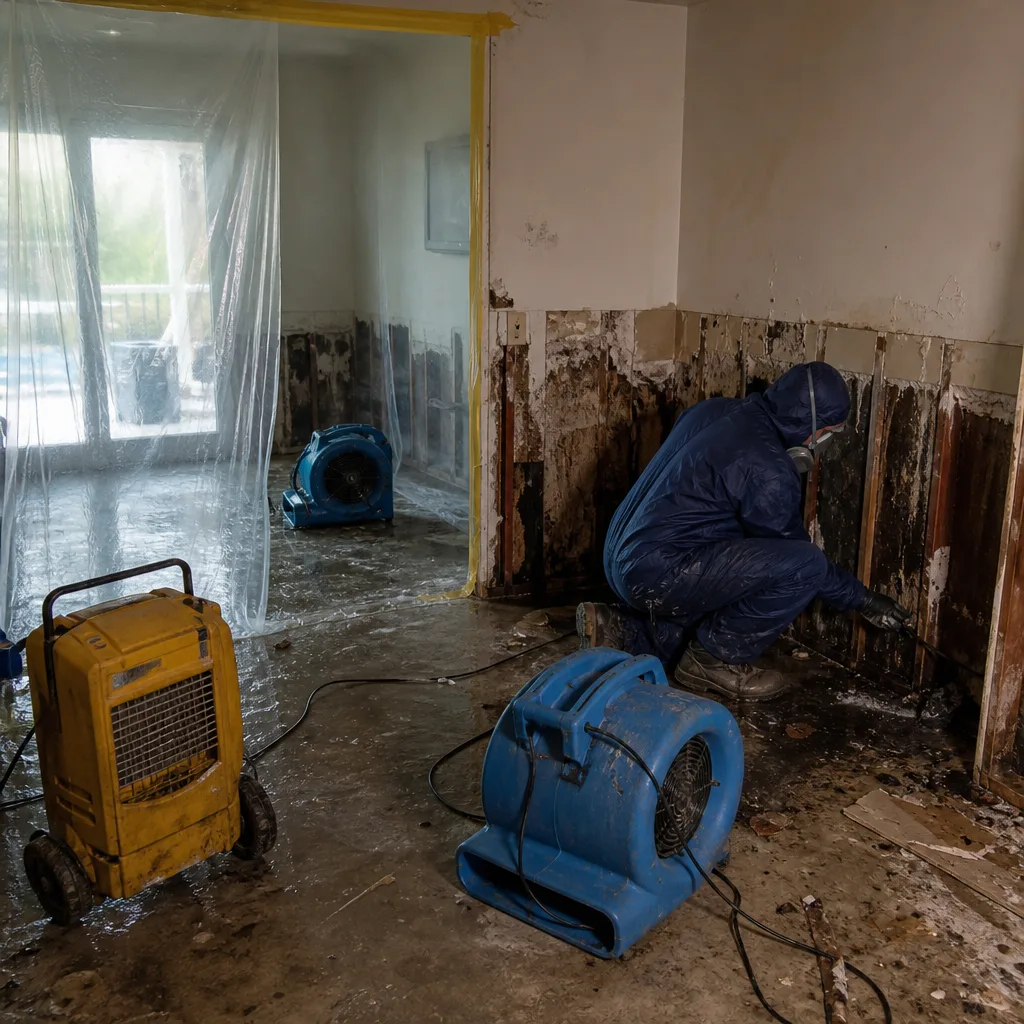 Before
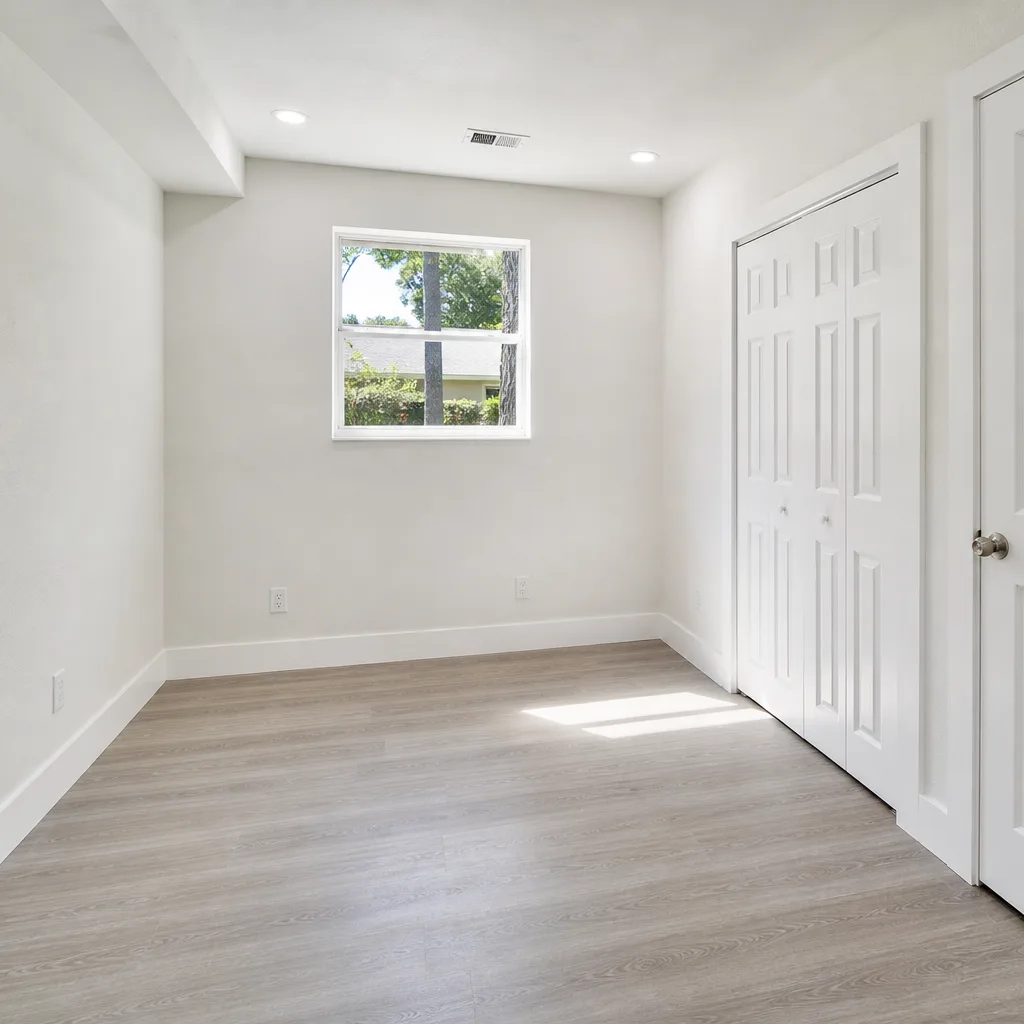 After
After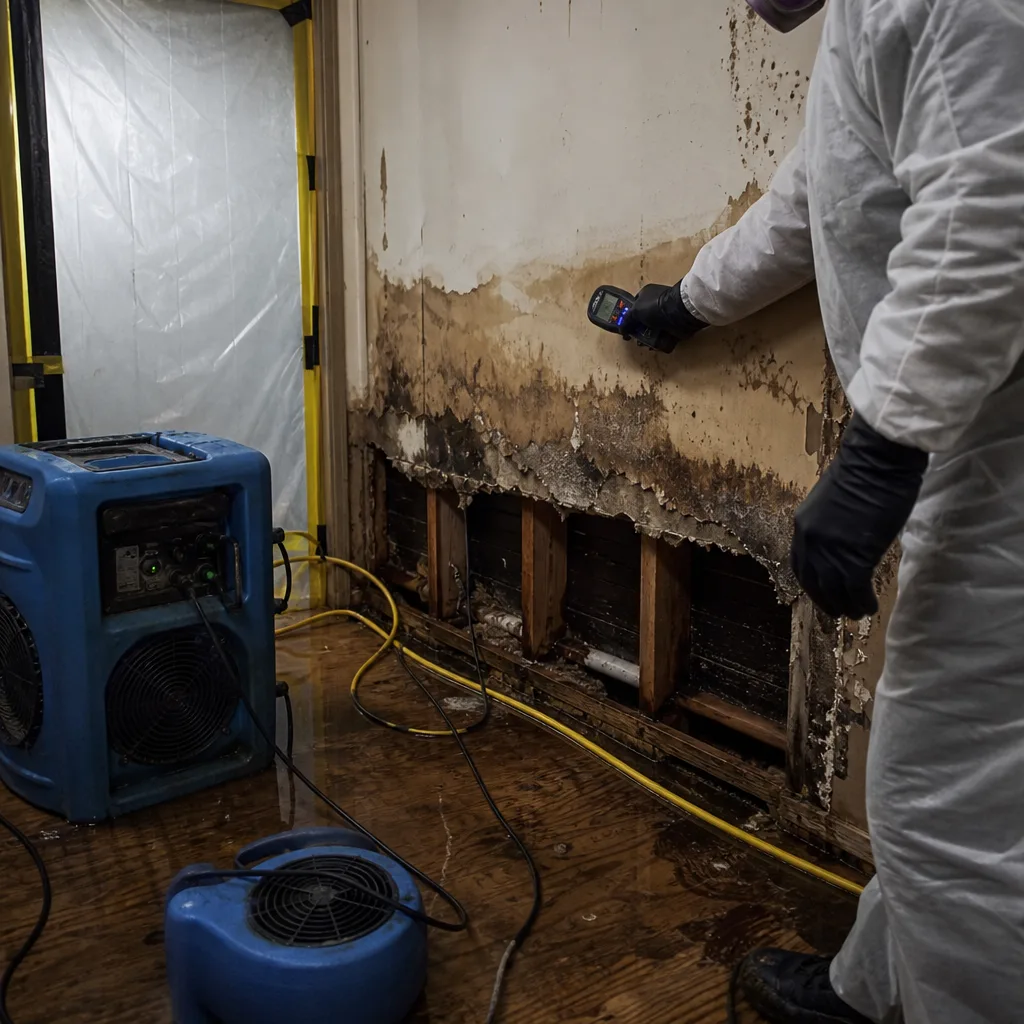 Before
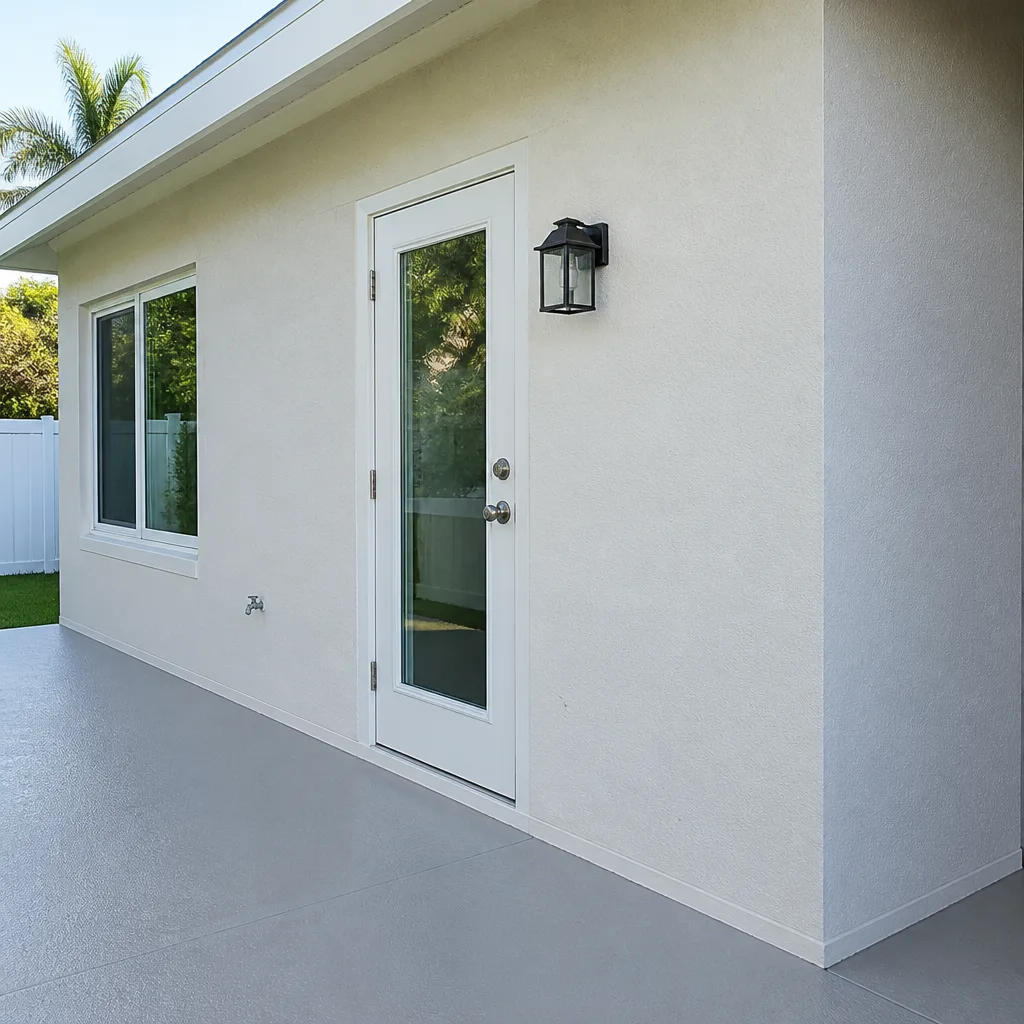 After
AfterWhen to Call a Professional
Call a professional restoration contractor when water has been standing for more than 24 hours, when you see visible mold growth larger than a dinner plate, when fire or smoke damage affects structural materials, or when you smell a musty odor that suggests hidden moisture. If the damage involves contaminated water from a sewage backup or floodwater, do not attempt cleanup yourself; the health risks are real and the drying requirements exceed what consumer equipment can achieve. West Palm Beach’s heat and humidity accelerate mold growth faster than most homeowners realize, so a 48-hour delay can turn a $2,000 drying job into a $12,000 remediation. Keegan Restoration West Palm Beach offers free estimates in West Palm Beach, and we answer the phone live at (728) 220-0713, 24 hours a day, 7 days a week.
Frequently Asked Questions
Go to myfloridalicense.com, select “Verify a License,” enter the contractor’s name or license number, and review their current status, expiration date, and any disciplinary history. This takes under three minutes and should be done for every contractor you consider hiring in West Palm Beach, regardless of how they were recommended to you.
A restoration contract should include a written scope of loss with line-item pricing, a change order procedure requiring your written approval for additional work, a payment schedule tied to milestones, the names of any subcontractors, and a written warranty with return-visit language. If any of those elements is missing, the contract protects the contractor, not you. Call (728) 220-0713 and we will walk you through what a complete contract should look like.
Most homeowner policies in Florida cover water and fire damage restoration when the work is performed by a licensed contractor and documented correctly. The key variable is whether the contractor’s documentation package meets the insurer’s standards, and not every contractor in West Palm Beach produces documentation that does. Ask about documentation before you sign, not after the adjuster has questions.
In West Palm Beach, a restoration company with live 24/7 dispatch can often have a crew on site the same day you call, especially for active water damage where every hour of delay increases the drying time and the risk of mold. A company that answers the phone with a recorded menu and returns your call the next day is already behind. For water emergencies, speed of response is the single biggest factor in controlling the final repair cost.
If you see more than a small patch of mold, or if there is a musty odor with no visible source, you likely have hidden growth inside walls, under flooring, or in the HVAC system. A surface cleaning will not address what you cannot see, and in West Palm Beach’s humid climate, the hidden growth will return. A written moisture assessment from a licensed contractor will tell you the difference, and the assessment is usually free.
A full-service restoration contractor in West Palm Beach should coordinate directly with your adjuster, provide the documentation package, and walk the adjuster through the scope of loss on site. You should not have to translate restoration technical language to your insurance company. Ask the contractor directly: “Will you speak directly with my adjuster?” If the answer is no, keep calling until you find one who will. Call (728) 220-0713 for a free estimate and we will handle the adjuster communication from day one.
The Bottom Line
Hiring a damage restoration contractor in West Palm Beach is a due-diligence exercise, not a gut-feel decision. Verify the Florida license through the DBPR, confirm active insurance and workers’ comp, demand a written scope of loss with line-item pricing, compare estimates by their line items rather than their bottom line, and hold back payment until the work is complete and documented. The contractors who welcome this process are the ones who will honor their price after demolition begins. The ones who resist it are the ones who will inflate it. The Garrison Code we run every job to comes down to five things: show up inside the window, price in writing, do it by the book, leave the site clean, and stand behind the work for a full year. That is the standard you should hold any contractor to in West Palm Beach, and it is the standard we have been held to since 2005. For more guides & resources on protecting your home, visit our blog.
Written by Shane Pruitt, Owner at Keegan Restoration West Palm Beach, serving West Palm Beach since 2005.